
Hospital: Hope Maternity Home And Imaging Center, Meerut
Consultant: Dr. Seema Agarwal (M.B.B.S. & D.G.O.)
Introduction: What Is IUI Treatment?
For couples experiencing difficulty conceiving naturally, fertility treatments can offer an opportunity to achieve pregnancy. One commonly recommended fertility treatment is Intrauterine Insemination (IUI).
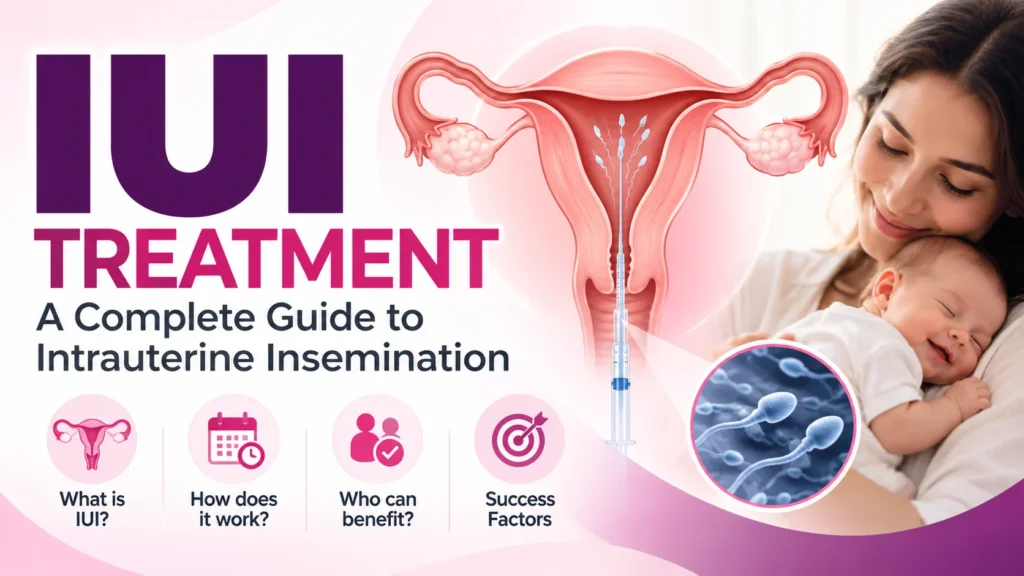
IUI is a fertility procedure in which specially prepared sperm are placed directly inside the uterus around the time of ovulation. This helps sperm reach the reproductive tract more efficiently and may increase the chances of fertilisation in appropriately selected patients.
At Hope Maternity Home And Imaging Center, located on Garh Road in Meerut, fertility care focuses on understanding each couple’s needs and recommending suitable treatment options. Under the consultation of Dr. Seema Agarwal (M.B.B.S. & D.G.O.), patients can discuss their fertility concerns and learn whether IUI may be appropriate for them.
What Does IUI Stand For?
IUI stands for Intrauterine Insemination. It is a fertility treatment designed to help sperm reach the egg by placing washed and concentrated sperm directly into the uterus.
In natural conception, sperm travel through the cervix and uterus to reach the fallopian tube, where fertilisation usually occurs. During IUI, sperm are prepared in a laboratory to remove seminal fluid and concentrate the motile sperm before they are inserted into the uterus using a thin, flexible catheter.
IUI is less invasive than in vitro fertilisation (IVF) because fertilisation still occurs inside the body rather than in a laboratory.
Who May Benefit from IUI Treatment?
IUI may be considered for couples with certain fertility-related conditions, depending on their medical history and test results.
1. Unexplained Infertility
Sometimes, fertility investigations do not identify a clear reason why a couple has been unable to conceive. In selected cases of unexplained infertility, IUI, sometimes combined with ovulation-stimulating medication, may be recommended.
2. Mild Male-Factor Infertility
IUI may be an option when semen analysis shows mildly reduced sperm movement or other selected sperm-related concerns. The decision depends on the number of motile sperm available after preparation and the overall fertility assessment.
3. Ovulation Problems
Women who do not ovulate regularly may benefit from medication to support ovulation. If appropriate, IUI can be timed around ovulation to improve the opportunity for fertilisation.
4. Cervical Factors
In certain cases, cervical mucus or other cervical factors may interfere with sperm movement. IUI bypasses the cervix by placing prepared sperm directly into the uterus.
5. Use of Donor Sperm
IUI may be considered when donor sperm is required, subject to applicable medical guidelines, screening requirements, and regulations.
Important: IUI is not suitable for every couple. A fertility specialist must assess the cause of infertility and determine whether this treatment is likely to be beneficial.
When Is IUI Not Recommended?
IUI may be less suitable or may not be recommended in certain situations, including:
- Both fallopian tubes are blocked.
- There is severe male-factor infertility where IVF with intracytoplasmic sperm injection (ICSI) may be more appropriate.
- There are significant fertility conditions that require a different treatment approach.
- The woman’s age, ovarian reserve, or duration of infertility makes another option more suitable.
- Untreated pelvic infection or other medical conditions need attention first.
The appropriate treatment depends on the individual circumstances of each couple.
How Does IUI Treatment Work? Step-by-Step Procedure
The IUI process generally involves several steps. The exact treatment plan and timing may vary from patient to patient.
Step 1: Initial Fertility Consultation
The first step is a consultation with the doctor. Both partners may be asked about their medical history, menstrual cycles, previous pregnancies, duration of infertility, and any previous fertility treatments.
The doctor may recommend investigations such as:
- Semen analysis
- Ultrasound examination
- Ovulation assessment
- Hormone tests, when indicated
- Fallopian tube patency testing, when appropriate
These investigations help determine whether IUI is a suitable option.
Step 2: Monitoring Ovulation
IUI must be timed close to ovulation. The doctor may monitor the development of ovarian follicles through ultrasound scans and, where necessary, hormone testing.
Some women ovulate naturally, while others may require medication to stimulate the development of an egg. If ovulation-induction medication is prescribed, monitoring is important to reduce the risk of multiple pregnancy and ovarian hyperstimulation.
Step 3: Trigger Injection, If Required
In selected treatment cycles, the doctor may prescribe an injection to trigger the final maturation of the egg and help plan the timing of insemination.
Not every patient requires a trigger injection. The decision depends on follicular development and the treatment protocol.
Step 4: Sperm Collection and Preparation
A semen sample is collected, usually on the day of the procedure. In cases involving donor sperm, the sample is handled according to the applicable screening and laboratory protocols.
The laboratory processes the sample to separate and concentrate suitable motile sperm. This preparation removes much of the seminal fluid and helps select sperm for insemination.
Step 5: Insemination Procedure
The patient lies comfortably on an examination table. The doctor gently inserts a speculum to visualise the cervix and passes a thin, flexible catheter through the cervix into the uterus.
The prepared sperm sample is then introduced into the uterus. The catheter and speculum are removed after the procedure.
IUI usually takes only a few minutes and generally does not require anaesthesia. Some patients experience mild cramping or temporary discomfort.
Step 6: Recovery After IUI
Most patients can return to their usual daily activities soon after the procedure, unless the doctor advises otherwise.
There is generally no need for prolonged bed rest. Patients should follow their prescribed medication schedule and seek medical advice if they experience severe pain, heavy bleeding, fever, or other concerning symptoms.
Step 7: Pregnancy Test
A pregnancy test is generally recommended around 14 days after insemination, or at the time advised by the treating doctor.
Testing too early may produce a misleading result. If an hCG trigger injection was used, it can temporarily affect pregnancy test results.
If the test is positive, the doctor will guide the patient regarding follow-up care and ultrasound timing. If it is negative, the next steps can be discussed based on the patient’s circumstances.
What Is the Success Rate of IUI Treatment?
IUI success rates vary considerably between patients and treatment cycles. Factors that can influence the chance of pregnancy include:
- The woman’s age
- The cause and duration of infertility
- Whether ovulation occurs regularly
- The condition of the fallopian tubes
- Sperm quality and the number of motile sperm after preparation
- Whether fertility medication is used
- Previous treatment outcomes
In general, IUI tends to have better outcomes in younger women with suitable fertility factors and a shorter duration of infertility. Success rates may be lower with increasing age or significant fertility problems.
No clinic can guarantee pregnancy from IUI. Patients should discuss realistic expectations and the likely benefit of proceeding with IUI versus other treatments with their doctor.
What Is the Cost of IUI Treatment in Meerut?
The cost of IUI treatment in Meerut varies according to the investigations, medications, ultrasound monitoring, laboratory sperm preparation, and clinical services required.
The overall expense may differ if ovulation-induction medication or additional fertility investigations are needed. Some patients may require more than one treatment cycle.
At Hope Maternity Home And Imaging Center, couples can contact the clinic to discuss the consultation process, recommended investigations, treatment plan, and applicable charges.
It is advisable to ask for a clear breakdown of the expected expenses before beginning treatment. The final cost should be confirmed directly with the clinic.
IUI vs IVF: What Is the Difference?
IUI and IVF are different fertility treatments. The most appropriate option depends on the medical findings and the couple’s treatment goals.
IUI (Intrauterine Insemination):
- Prepared sperm are placed inside the uterus.
- Fertilisation occurs inside the body.
- The procedure is generally simpler and less invasive.
- It may be appropriate for selected cases of unexplained infertility, mild male-factor infertility, and other suitable conditions.
IVF (In Vitro Fertilisation):
- Eggs are collected from the ovaries.
- Fertilisation takes place in a laboratory.
- An embryo is transferred into the uterus.
- It may be recommended for blocked fallopian tubes, certain cases of severe male-factor infertility, or when other treatments have not been successful.
IUI is not always the first or least expensive option over the entire course of treatment. A specialist can help compare the likely benefits, time, cost, and risks of both approaches.
Are There Any Risks or Side Effects of IUI?
IUI is generally considered a low-risk procedure when performed appropriately. However, some risks and side effects are possible.
Mild Cramping or Spotting
Some patients may experience temporary cramping or light spotting after insemination. These symptoms usually settle quickly.
Multiple Pregnancy
If ovulation-stimulating medication is used, more than one egg may be released, increasing the possibility of twins or higher-order multiple pregnancy. Ultrasound monitoring and careful medication management help reduce this risk.
Ovarian Hyperstimulation
Certain fertility medications can cause the ovaries to become enlarged and, rarely, lead to ovarian hyperstimulation syndrome. The risk depends on the medication and the patient’s response.
Infection
Infection is uncommon but possible with procedures involving the reproductive tract.
Patients should contact their doctor if they experience severe or worsening abdominal pain, heavy bleeding, fever, significant abdominal swelling, breathing difficulty, or other unusual symptoms.
How Can You Prepare for IUI Treatment?
Preparation can help patients feel more informed and comfortable during treatment.
- Attend the recommended fertility consultation and complete the advised investigations.
- Share details of previous pregnancies, miscarriages, medical conditions, medications, and fertility treatments.
- Follow the doctor’s instructions regarding ovulation monitoring and prescribed medication.
- Maintain a balanced diet and regular, moderate physical activity.
- Avoid smoking, recreational drugs, and alcohol when trying to conceive.
- Ask the doctor whether any medicines or supplements should be adjusted.
- Discuss the timing of the procedure, expected costs, possible side effects, and when to take a pregnancy test.
Patients should not start fertility medication or change prescribed doses without medical guidance.
Frequently Asked Questions About IUI Treatment
1. Is IUI treatment painful?
Most patients experience little or no pain. Some may notice mild cramping or discomfort during or shortly after insemination. The experience varies from person to person.
2. How long does the IUI procedure take?
The insemination itself usually takes only a few minutes. The complete appointment may take longer because of sperm preparation and other clinical requirements.
3. How soon can I take a pregnancy test after IUI?
A pregnancy test is generally advised about 14 days after insemination, following the doctor’s instructions.
4. Can I return to work after IUI?
Most patients can resume normal daily activities soon after the procedure. Follow any individual advice provided by the treating doctor.
5. How many IUI cycles may be needed?
The number of cycles depends on age, diagnosis, treatment response, and previous results. The doctor can discuss how many cycles may be reasonable before reassessing the treatment plan.
6. Is IUI better than IVF?
Neither treatment is universally better. IUI may be appropriate for selected fertility conditions, while IVF may be more suitable for other diagnoses. The decision should be based on a fertility evaluation.
7. Can IUI guarantee pregnancy?
No. Pregnancy cannot be guaranteed with IUI or any fertility treatment. Success depends on several medical and individual factors.
8. When should a couple seek fertility advice?
As a general guide, couples may seek evaluation after 12 months of regular unprotected intercourse if the woman is under 35, or after six months if she is 35 or older. Earlier assessment may be appropriate for women over 40 or when there are known fertility concerns, irregular periods, or other relevant medical conditions.
Why Consult Hope Maternity Home And Imaging Center for IUI Guidance?
Choosing a fertility treatment begins with understanding the underlying cause of difficulty conceiving. A personalised assessment can help couples understand their options, the investigations required, and the likely benefits and limitations of treatment.
At Hope Maternity Home And Imaging Center, Meerut, patients can consult Dr. Seema Agarwal (M.B.B.S. & D.G.O.) to discuss fertility concerns and learn whether IUI or another treatment may be appropriate for their circumstances.
The aim is to provide clear information, appropriate medical guidance, and supportive care throughout the fertility evaluation process.
Book a Fertility Consultation in Meerut
If you are considering IUI treatment, contact Hope Maternity Home And Imaging Center to arrange a consultation and discuss the next steps.
Hospital Name: Hope Maternity Home And Imaging Center
Doctor: Dr. Seema Agarwal (M.B.B.S. & D.G.O.)
Address: 6, Bank Colony, Garh Road, Meerut, Uttar Pradesh, India
Contact Numbers: 9837032733, 9422022401
Email: hopematernityhome@gmail.com
Take the first step towards understanding your fertility options. Schedule a consultation to discuss an individualised treatment plan.
Medical disclaimer: This article is intended for general educational purposes and is not a substitute for professional medical advice, diagnosis, or treatment. Suitability for IUI should be assessed by a qualified medical professional.