
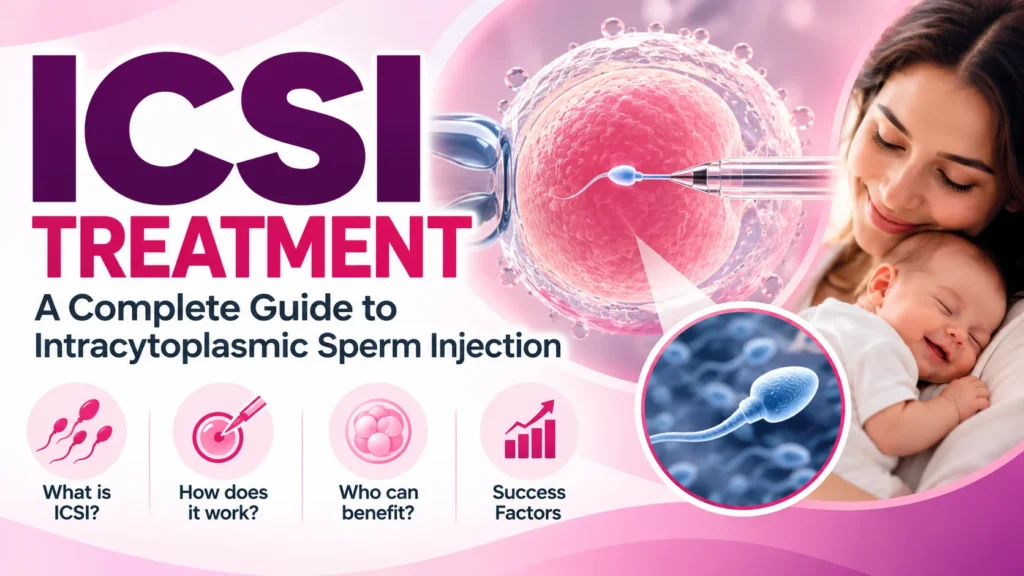
ICSI Treatment: Procedure, Benefits, Success Rate, and Cost
Hospital Name: Hope Maternity Home And Imaging Center
Consultant: Dr. Seema Agarwal (M.B.B.S. & D.G.O.)
Introduction: What Is ICSI Treatment?
For couples experiencing difficulty conceiving, advances in fertility medicine offer different treatment options based on their individual needs. One such advanced technique is Intracytoplasmic Sperm Injection (ICSI), which is commonly used as part of In Vitro Fertilisation (IVF).
ICSI is a specialised laboratory procedure in which a single sperm is injected directly into a mature egg to assist fertilisation. It is particularly useful in certain cases of male-factor infertility and may be recommended when previous fertilisation attempts have been unsuccessful.
At Hope Maternity Home And Imaging Center, located at 6, Bank Colony, Garh Road, Meerut, patients can consult Dr. Seema Agarwal (M.B.B.S. & D.G.O.) to discuss fertility concerns and understand the treatment options that may be appropriate for them.
What Does ICSI Stand For?
ICSI stands for Intracytoplasmic Sperm Injection. It is a laboratory technique used during an IVF cycle.
In conventional IVF, eggs and sperm are placed together in a laboratory dish, allowing fertilisation to occur naturally under controlled laboratory conditions. In ICSI, an embryologist selects a single sperm and injects it directly into a mature egg using specialised equipment.
After fertilisation, the resulting embryos are monitored in the laboratory. If suitable embryos develop, an embryo may be transferred into the uterus.
ICSI helps overcome certain barriers to fertilisation, particularly when sperm-related factors are present. However, it does not guarantee fertilisation, embryo development, implantation, or pregnancy.
Who May Need ICSI Treatment?
ICSI may be recommended for selected couples after a fertility assessment. The decision depends on sperm quality, previous treatment history, egg-related factors, and other clinical findings.
1. Severe Male-Factor Infertility
ICSI is often considered when semen analysis identifies significantly low sperm count, reduced sperm movement, or other sperm abnormalities that may interfere with fertilisation.
2. Previous IVF Fertilisation Failure
If fertilisation has been unsuccessful or unexpectedly low during a previous conventional IVF cycle, ICSI may be considered in a subsequent cycle.
3. Surgically Retrieved Sperm
In selected cases, sperm may be retrieved from the epididymis or testicle through a medical procedure. ICSI may be used when suitable sperm are available for laboratory fertilisation.
4. Certain Sperm-Related Problems
ICSI may be appropriate when sperm have difficulty fertilising eggs through conventional IVF methods, depending on the specific diagnosis and clinical assessment.
5. Selected Fertility Treatment Situations
ICSI may be considered in certain specialised fertility situations based on the couple’s history and the fertility team’s assessment.
Important: ICSI is not necessary for every IVF patient. When sperm parameters are normal and there is no specific indication, conventional IVF may be an appropriate option. The fertility specialist should explain the expected benefits, limitations, risks, and alternatives before treatment.
When May ICSI Not Be Necessary?
ICSI is a fertilisation technique rather than a universal solution for all fertility problems.
It may not provide a clear advantage over conventional IVF in cases where sperm quality is normal and no specific indication exists.
ICSI also cannot independently correct every cause of infertility. Factors such as egg quality, embryo development, uterine health, and the underlying cause of infertility continue to influence treatment outcomes.
The appropriate approach should be based on the complete fertility assessment rather than the assumption that a more advanced laboratory procedure will always produce better results.
How Does ICSI Treatment Work? Step-by-Step Procedure
ICSI is generally performed as part of an IVF treatment cycle. The process involves several stages.
Step 1: Initial Fertility Consultation
The first step is an evaluation of both partners. The doctor reviews medical history, previous pregnancies, duration of infertility, previous fertility treatments, and any relevant medical conditions.
Depending on the circumstances, investigations may include:
- Semen analysis
- Hormone testing, when indicated
- Ultrasound examination
- Ovarian reserve assessment
- Evaluation of the uterus and reproductive organs
- Additional investigations based on the clinical findings
These results help the fertility team decide whether IVF with ICSI may be appropriate.
Step 2: Ovarian Stimulation
The woman may be prescribed fertility medications to stimulate the ovaries to develop multiple follicles during a treatment cycle.
The response is monitored using ultrasound scans and, when necessary, blood tests. Medication doses may be adjusted according to the patient’s response.
The aim is to develop suitable follicles while reducing the risk of complications.
Step 3: Trigger Medication
When the follicles have developed sufficiently, a trigger medication may be given to support final egg maturation.
The timing of this medication is important because egg retrieval is scheduled according to the treatment protocol.
Step 4: Egg Retrieval
Egg retrieval is generally performed using ultrasound guidance and a specialised needle, usually with sedation or anaesthesia as appropriate.
The collected eggs are sent to the embryology laboratory, where they are examined to determine which are mature and suitable for ICSI.
Step 5: Sperm Collection and Preparation
A semen sample is usually collected on the day of egg retrieval. In selected cases, surgically retrieved sperm or previously cryopreserved sperm may be used.
The embryology laboratory processes the sample and selects an appropriate sperm for injection.
The availability and suitability of sperm depend on the individual case.
Step 6: Sperm Injection Into the Egg
This is the main step in ICSI treatment.
Using a specialised microscope and fine instruments, the embryologist holds a mature egg in position and injects a single selected sperm directly into the egg.
The procedure requires precision and specialised laboratory expertise.
ICSI assists the fertilisation process, but not every injected egg will fertilise successfully.
Step 7: Fertilisation Assessment
After injection, the eggs are monitored in the laboratory to assess whether fertilisation has occurred.
Fertilised eggs may continue developing into embryos over the following days. The number and quality of embryos vary from patient to patient.
Step 8: Embryo Development and Selection
The embryology team monitors embryo development and assesses which embryos may be suitable for transfer or freezing.
Not every fertilised egg develops into an embryo suitable for transfer. The treatment plan depends on embryo development, the patient’s medical circumstances, and the clinic’s protocols.
Step 9: Embryo Transfer
If a suitable embryo is available, it may be transferred into the uterus using a thin catheter.
Depending on the clinical situation, the transfer may occur during the same treatment cycle or in a later frozen embryo transfer cycle.
The timing depends on medical factors, embryo development, and the fertility team’s recommendations.
Step 10: Pregnancy Test and Follow-Up
A pregnancy test is generally scheduled approximately 9–14 days after embryo transfer, depending on the treatment protocol and the type of transfer.
The fertility team will advise the appropriate testing date and any prescribed medications that should be continued.
If the test is positive, follow-up care and ultrasound timing will be arranged. If it is negative, the doctor can discuss the result and possible next steps.
What Is the Success Rate of ICSI Treatment?
ICSI success depends on several factors, and outcomes vary between individuals and treatment cycles.
Important factors include:
- The woman’s age
- Egg quality and maturity
- Sperm quality and the underlying cause of infertility
- The number of eggs collected
- Fertilisation and embryo development
- Uterine and general reproductive health
- Previous fertility treatment outcomes
- The number and quality of embryos available for transfer
ICSI can improve the chance of fertilisation in certain cases of male-factor infertility. However, successful fertilisation does not necessarily result in a healthy embryo or pregnancy.
Pregnancy and live-birth outcomes are influenced by factors beyond the injection technique itself. The treating fertility specialist can explain realistic expectations based on the patient’s medical history and test results.
No clinic can guarantee a successful pregnancy through ICSI.
What Is the Cost of ICSI Treatment in Meerut?
The cost of ICSI treatment in Meerut varies according to the individual treatment plan and the services required.
The total expense may include:
- Initial consultation and fertility investigations
- Ovarian stimulation medications
- Ultrasound monitoring and blood tests
- Egg retrieval and associated clinical services
- Laboratory sperm preparation and ICSI
- Embryo culture and assessment
- Embryo transfer
- Embryo freezing or storage, if required
- Additional procedures or medications, when indicated
The final cost may differ depending on the number of investigations, medications, laboratory procedures, and whether a fresh or frozen embryo transfer is planned.
At Hope Maternity Home And Imaging Center, patients can contact the clinic to enquire about consultation charges, available services, and the applicable costs for their recommended treatment plan.
Before beginning treatment, couples should request a clear explanation of the expected charges and any additional costs that may arise.
ICSI vs IVF: What Is the Difference?
ICSI and IVF are closely related, but they describe different aspects of fertility treatment.
Conventional IVF:
- Eggs and sperm are placed together in a laboratory dish.
- Fertilisation occurs without direct sperm injection.
- It may be suitable when sperm parameters are adequate and no specific indication for ICSI exists.
IVF with ICSI:
- A single selected sperm is injected directly into each mature egg chosen for ICSI.
- It is often used for certain cases of male-factor infertility or previous fertilisation failure.
- It requires specialised laboratory equipment and expertise.
Both approaches involve ovarian stimulation in many treatment cycles, egg retrieval, embryo culture, and usually embryo transfer.
ICSI is a fertilisation method used within IVF; it is not a completely separate alternative to IVF. The decision between conventional IVF and ICSI should be based on medical indications and the expected benefits for the couple.
What Are the Risks and Limitations of ICSI?
ICSI is widely used in assisted reproduction, but it has limitations and potential risks.
1. Fertilisation May Not Occur
Even after sperm injection, some eggs may not fertilise. The outcome depends on egg maturity, sperm factors, and other biological processes.
2. Embryo Development May Stop
Not all fertilised eggs develop into embryos suitable for transfer. Embryo development depends on several biological factors.
3. Risks Associated With IVF
ICSI is part of an IVF cycle, so patients may experience risks associated with ovarian stimulation and egg retrieval. These can include medication side effects, ovarian hyperstimulation syndrome, bleeding, infection, and complications related to sedation or anaesthesia.
4. Egg Damage
The injection procedure can damage some eggs, and not every injected egg survives the procedure.
5. Pregnancy-Related Risks
Pregnancy following ICSI may involve the usual risks associated with pregnancy. Some studies have identified associations between assisted reproductive techniques and certain uncommon outcomes, although the contribution of the procedure itself can be difficult to separate from underlying parental infertility and other factors.
The fertility specialist can discuss the risks relevant to each patient’s circumstances.
How Can You Prepare for ICSI Treatment?
Preparation begins with a complete fertility evaluation and a clear understanding of the proposed treatment plan.
- Attend all recommended consultations and investigations.
- Share your complete medical history and previous fertility treatment records.
- Follow the prescribed medication schedule carefully.
- Ask the doctor about medication side effects and monitoring appointments.
- Maintain a balanced diet and a healthy lifestyle.
- Avoid smoking, recreational drugs, and alcohol when trying to conceive.
- Discuss any supplements or existing medications with the treating doctor.
- Ask about embryo transfer timing, freezing options, expected costs, and possible outcomes.
- Seek emotional support when needed, as fertility treatment can be physically and emotionally demanding.
Do not start, stop, or change fertility medications without medical advice.
Frequently Asked Questions About ICSI Treatment
1. Is ICSI treatment painful?
The sperm injection takes place in the laboratory, not inside the woman’s body. Patients may experience discomfort associated with ovarian stimulation or egg retrieval. Egg retrieval is generally performed with appropriate pain relief or sedation.
2. How long does ICSI treatment take?
The ovarian stimulation and egg retrieval stage often takes around two weeks, although the exact duration varies. Embryo development and transfer follow according to the treatment plan. Frozen embryo transfer may take place in a later cycle.
3. Does ICSI guarantee pregnancy?
No. ICSI may help achieve fertilisation in selected cases, but it cannot guarantee embryo development, implantation, pregnancy, or live birth.
4. Is ICSI only for male infertility?
No. ICSI is commonly used for male-factor infertility, but it may also be considered after previous fertilisation failure or in selected clinical situations. The indication should be assessed individually.
5. What happens if ICSI does not work?
The fertility specialist will review the treatment cycle, including egg maturity, fertilisation, embryo development, and transfer-related factors. Further treatment recommendations will depend on these findings and the couple’s preferences.
6. Is ICSI better than conventional IVF?
Not in every case. ICSI can be particularly useful for certain sperm-related problems, but it has not been shown to provide a universal advantage for all couples. The most suitable method depends on the clinical indication.
7. Can ICSI be used with frozen sperm?
Yes. In suitable cases, previously frozen sperm may be used for ICSI. The decision depends on sperm availability, quality, and the laboratory’s assessment.
8. When should couples seek fertility treatment?
As a general guide, couples may consider a fertility evaluation after 12 months of regular unprotected intercourse if the woman is under 35, or after six months if she is 35 or older. Earlier assessment may be appropriate for women over 40 or when there are known fertility concerns or relevant medical conditions.
Why Consult Hope Maternity Home And Imaging Center for Fertility Guidance?
Choosing an appropriate fertility treatment requires a careful assessment of both partners and the underlying reasons for difficulty conceiving.
At Hope Maternity Home And Imaging Center, Meerut, patients can consult Dr. Seema Agarwal (M.B.B.S. & D.G.O.) to discuss fertility concerns, understand available treatment pathways, and determine whether further specialist assessment for IVF with ICSI is appropriate.
The goal is to help couples make informed decisions through clear communication, personalised guidance, and appropriate medical care.
Book a Fertility Consultation in Meerut
If you are considering ICSI or have been advised to undergo advanced fertility treatment, contact Hope Maternity Home And Imaging Center to discuss your concerns and arrange a consultation.
Hospital Name: Hope Maternity Home And Imaging Center
Doctor: Dr. Seema Agarwal (M.B.B.S. & D.G.O.)
Address: 6, Bank Colony, Garh Road, Meerut, Uttar Pradesh, India
Contact Numbers: 9837032733, 9422022401
Email: hopematernityhome@gmail.com
Take the first step towards understanding your fertility options by discussing your medical history, investigations, and personalised treatment plan with a qualified medical professional.
Medical Disclaimer: This article is intended for general educational purposes and is not a substitute for professional medical advice, diagnosis, or treatment. The suitability of IVF with ICSI should be assessed by a qualified fertility specialist based on the couple’s individual circumstances.