
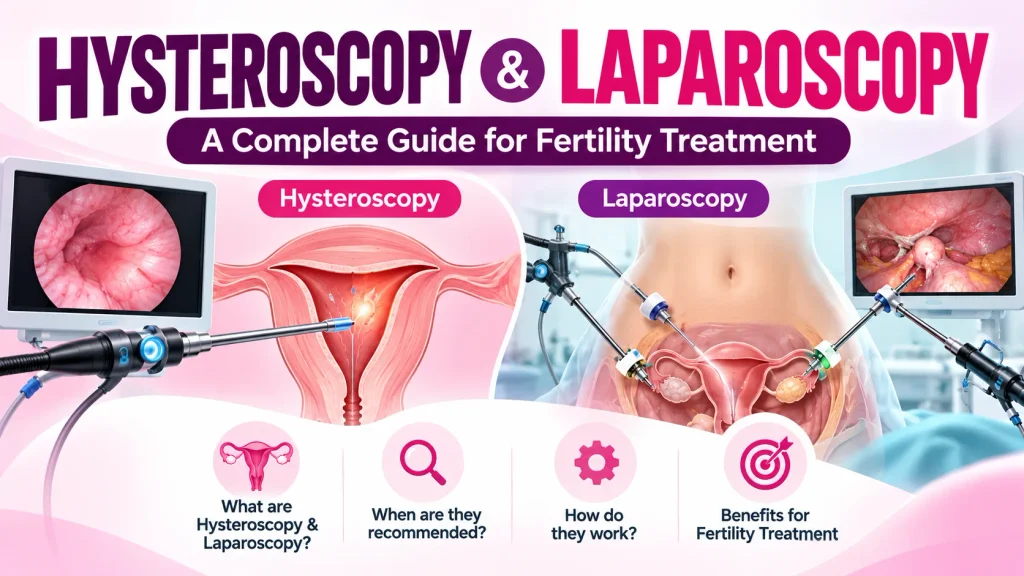
Hysteroscopy and Laparoscopy: Procedure, Benefits, Risks, and Recovery
Hospital Name: Hope Maternity Home And Imaging Center
Doctor: Dr. Seema Agarwal (M.B.B.S. & D.G.O.)
Introduction: Understanding Hysteroscopy and Laparoscopy
Women’s reproductive health plays an important role in fertility, menstrual health, and overall well-being. Certain conditions affecting the uterus, fallopian tubes, ovaries, or pelvic organs may cause symptoms such as irregular periods, pelvic pain, difficulty conceiving, or recurrent pregnancy loss.
Hysteroscopy and laparoscopy are two minimally invasive surgical procedures that help doctors examine and, when appropriate, treat different gynaecological conditions.
Although both procedures are used in women’s healthcare, they serve different purposes. Hysteroscopy allows a doctor to examine the inside of the uterus through the vagina and cervix, while laparoscopy allows examination of the pelvic and abdominal organs through small incisions in the abdomen.
At Hope Maternity Home And Imaging Center, located at 6, Bank Colony, Garh Road, Meerut, patients can consult Dr. Seema Agarwal (M.B.B.S. & D.G.O.) to discuss their gynaecological concerns and understand which investigations or treatment options may be appropriate.
What Is Hysteroscopy?
Hysteroscopy is a procedure used to examine the inside of the uterus using a thin instrument called a hysteroscope. The instrument contains a light and a camera, allowing the doctor to view the uterine cavity.
The hysteroscope is inserted through the vagina and cervix, so abdominal incisions are not required.
Depending on the reason for the procedure, hysteroscopy may be performed for diagnosis or to treat certain conditions affecting the uterine cavity.
Why Is Hysteroscopy Recommended?
A doctor may recommend hysteroscopy for the following reasons:
1. Abnormal Uterine Bleeding
Hysteroscopy can help investigate heavy menstrual bleeding, bleeding between periods, or other unexplained uterine bleeding when an examination of the uterine cavity is indicated.
2. Uterine Polyps
Endometrial polyps are growths that develop in the lining of the uterus. Some polyps may cause irregular bleeding or be associated with fertility problems. Hysteroscopy can help identify and remove suitable polyps.
3. Submucosal Fibroids
Some fibroids grow into the uterine cavity and may affect menstrual bleeding or reproductive outcomes. Selected submucosal fibroids can be removed through hysteroscopic surgery, depending on their size, location, and complexity.
4. Uterine Adhesions
Scar tissue inside the uterus, also called intrauterine adhesions, may develop after certain uterine procedures or infections. In selected cases, hysteroscopy can help diagnose and treat these adhesions.
5. Infertility Evaluation
Hysteroscopy may be recommended when a doctor suspects that a problem inside the uterine cavity could be contributing to difficulty conceiving or unsuccessful fertility treatment.
6. Recurrent Pregnancy Loss
In selected patients with recurrent pregnancy loss, examination of the uterine cavity may be recommended to investigate possible structural abnormalities.
Hysteroscopy is not necessary for every patient with infertility or miscarriage. The decision depends on the patient’s history, examination, and other investigation results.
What Is Laparoscopy?
Laparoscopy is a minimally invasive surgical procedure used to examine and treat conditions involving the pelvic and abdominal organs.
A thin instrument with a camera, called a laparoscope, is inserted through a small incision, usually near the navel. Additional small incisions may be made if surgical instruments are needed.
The abdomen is usually inflated with carbon dioxide gas to provide space for the surgeon to see and operate safely.
Laparoscopy is commonly performed under general anaesthesia.
Why Is Laparoscopy Recommended?
1. Endometriosis
Endometriosis occurs when tissue similar to the lining of the uterus grows outside the uterus. It may cause painful periods, pelvic pain, pain during intercourse, or fertility difficulties.
Laparoscopy can help identify endometriosis in selected cases and may allow the surgeon to remove or treat affected tissue.
2. Ovarian Cysts
Some ovarian cysts require surgical evaluation or removal, depending on their size, appearance, symptoms, and risk factors. Laparoscopy may be suitable for selected cysts.
3. Pelvic Adhesions
Adhesions are bands of scar tissue that may develop after surgery, infection, endometriosis, or other pelvic conditions. In selected cases, laparoscopy can help assess and treat adhesions.
4. Tubal Problems
Laparoscopy may help assess certain conditions affecting the fallopian tubes, including pelvic adhesions or damage associated with previous infection or endometriosis. Tubal treatment depends on the findings and the patient’s reproductive goals.
5. Ectopic Pregnancy
An ectopic pregnancy occurs when a pregnancy develops outside the uterus, most commonly in a fallopian tube. Laparoscopic surgery may be required in selected cases, depending on the patient’s condition and clinical findings.
A suspected ectopic pregnancy requires prompt medical assessment.
6. Unexplained Pelvic Pain
Laparoscopy may be considered when persistent pelvic pain remains unexplained after initial investigations and there is a clinical reason to examine the pelvic organs directly.
7. Selected Infertility Investigations
In some patients, laparoscopy may help identify pelvic conditions that are not adequately assessed through non-surgical investigations. It is not routinely required for every infertility evaluation.
Hysteroscopy vs Laparoscopy: What Is the Difference?
Although both procedures use a camera and specialised instruments, they examine different areas of the reproductive system.
Hysteroscopy
- Examines the inside of the uterus.
- The instrument passes through the vagina and cervix.
- No abdominal incision is required.
- May be used to diagnose or treat uterine polyps, selected fibroids, and intrauterine adhesions.
- Anaesthesia requirements depend on the type and complexity of the procedure.
Laparoscopy
- Examines the pelvic and abdominal organs.
- The instrument enters through small abdominal incisions.
- Usually requires general anaesthesia.
- May be used to assess or treat endometriosis, ovarian cysts, pelvic adhesions, and selected tubal conditions.
- Recovery depends on the complexity of the operation.
The procedures are not interchangeable. A doctor recommends one or both based on the suspected condition and the treatment objective.
Can Hysteroscopy and Laparoscopy Help With Infertility?
Certain uterine, tubal, ovarian, and pelvic conditions may contribute to difficulty conceiving. Hysteroscopy and laparoscopy can help diagnose or treat selected problems that affect reproductive health.
How Hysteroscopy May Help
Hysteroscopy can identify abnormalities inside the uterine cavity, such as polyps, selected fibroids, or adhesions. Treating a relevant abnormality may improve the uterine environment in appropriate patients.
How Laparoscopy May Help
Laparoscopy can help diagnose and treat selected pelvic conditions, including endometriosis and adhesions. Treatment may be beneficial for some patients, depending on the condition and the overall fertility assessment.
Does Surgery Guarantee Pregnancy?
No. Neither hysteroscopy nor laparoscopy guarantees pregnancy. Fertility also depends on age, egg quality, ovulation, sperm factors, fallopian tube function, and other medical considerations.
Surgery may not be the best option for every patient. For some couples, treatments such as IUI or IVF may be more appropriate, depending on the diagnosis and individual circumstances.
A fertility specialist can explain the expected benefits, limitations, risks, and alternatives before a procedure is planned.
How Is Hysteroscopy Performed? Step-by-Step Procedure
Step 1: Medical Evaluation
The doctor reviews menstrual history, symptoms, previous pregnancies, fertility concerns, medications, and previous medical procedures.
An ultrasound or other investigation may be recommended before the procedure.
Step 2: Preparation
The preparation required depends on whether the hysteroscopy is diagnostic or operative.
The doctor explains whether fasting, medication adjustments, anaesthesia, or other preparation is required.
The timing of the procedure may be planned around the menstrual cycle when appropriate.
Step 3: Insertion of the Hysteroscope
The patient is positioned for a gynaecological examination. The hysteroscope is gently passed through the vagina and cervix into the uterus.
A suitable fluid is used to expand the uterine cavity so the doctor can examine the lining and internal structures.
Step 4: Examination and Treatment
The doctor examines the uterine cavity. If a suitable abnormality is found and treatment has been planned, specialised instruments may be used to remove a polyp, treat selected fibroids, or divide adhesions.
The treatment performed depends on the findings and the procedure’s planned scope.
Step 5: Recovery
Many patients undergoing diagnostic hysteroscopy can return home the same day. Recovery after operative hysteroscopy may take longer, depending on the extent of treatment and anaesthesia.
Mild cramping or light spotting may occur for a short time.
How Is Laparoscopy Performed? Step-by-Step Procedure
Step 1: Preoperative Assessment
The doctor reviews the patient’s symptoms, medical history, examination findings, imaging results, and the reason for surgery.
Blood tests or other investigations may be required. The surgical team explains the expected benefits, risks, alternatives, and recovery process.
Step 2: Anaesthesia
Laparoscopy is generally performed under general anaesthesia, meaning the patient is asleep during the operation.
Step 3: Small Abdominal Incisions
A small incision is made, usually near the navel, to introduce the laparoscope. Additional small incisions may be made for surgical instruments.
Step 4: Examination of the Pelvic Organs
Carbon dioxide gas is introduced into the abdomen to create space for visualisation.
The surgeon examines the relevant pelvic and abdominal structures, which may include the uterus, ovaries, fallopian tubes, and surrounding tissues.
Step 5: Treatment, If Required
Depending on the planned procedure and findings, the surgeon may remove endometriosis lesions, treat adhesions, remove a suitable ovarian cyst, or perform another indicated operation.
The exact treatment depends on the diagnosis, surgical findings, and the patient’s reproductive goals.
Step 6: Completion and Recovery
The instruments are removed, the gas is released as appropriate, and the incisions are closed.
Patients are monitored while recovering from anaesthesia. Many uncomplicated laparoscopic procedures allow same-day discharge, although some patients require an overnight hospital stay.
Recovery time depends on the complexity of surgery and the patient’s overall health.
What Are the Risks of Hysteroscopy?
Hysteroscopy is generally considered safe when appropriately performed, but complications can occur.
Possible risks include:
- Cramping and light vaginal bleeding
- Infection
- Injury or perforation of the uterine wall
- Fluid-related complications during certain operative procedures
- Rare complications related to anaesthesia
The likelihood of complications depends on the procedure, the patient’s medical history, and the treatment performed.
What Are the Risks of Laparoscopy?
Laparoscopy is minimally invasive, but it is still surgery and carries potential risks.
Possible complications include:
- Bleeding
- Infection
- Injury to nearby organs, blood vessels, or the bowel
- Complications related to general anaesthesia
- Blood clots
- Hernia at an incision site
- Conversion to open surgery if required for safety
Temporary abdominal discomfort, bloating, or shoulder-tip pain may occur because of the gas used during surgery.
The surgeon should explain the specific risks and precautions relevant to the planned procedure.
Recovery After Hysteroscopy and Laparoscopy
Recovery varies according to the type of procedure and whether treatment was performed.
Recovery After Hysteroscopy
Many patients experience mild cramping or spotting for a few days. The doctor may recommend avoiding certain activities, intercourse, tampons, or vaginal products for a specified period, depending on the procedure.
Recovery After Laparoscopy
Patients may experience temporary abdominal soreness, bloating, fatigue, or shoulder discomfort.
Light activities can often be resumed gradually, but strenuous exercise, heavy lifting, and driving should be avoided until the treating team confirms it is safe.
Follow all discharge instructions and attend recommended follow-up appointments.
When Should You Contact a Doctor?
Seek prompt medical advice if you experience:
- Heavy vaginal bleeding
- Fever or chills
- Severe or worsening abdominal pain
- Foul-smelling vaginal discharge
- Persistent vomiting
- Redness, swelling, or discharge from an incision
- Difficulty breathing, chest pain, or fainting
Severe symptoms such as chest pain or difficulty breathing require emergency medical attention.
What Is the Cost of Hysteroscopy and Laparoscopy in Meerut?
The cost of hysteroscopy and laparoscopy in Meerut depends on the type of procedure, the complexity of treatment, anaesthesia requirements, investigations, hospital facilities, and postoperative care.
Factors that may influence the cost include:
- Initial consultation and diagnostic investigations
- Ultrasound and other imaging
- Diagnostic versus operative hysteroscopy
- Diagnostic versus operative laparoscopy
- Surgical instruments and consumables
- Anaesthesia and operating theatre charges
- Hospital stay, if required
- Medications and follow-up visits
The cost of treating a uterine polyp may differ from that of removing a fibroid or performing surgery for endometriosis.
At Hope Maternity Home And Imaging Center, patients can contact the clinic to enquire about consultation arrangements, available services, and applicable charges for the recommended treatment.
Ask for a clear explanation of the expected costs before proceeding with surgery.
Frequently Asked Questions About Hysteroscopy and Laparoscopy
1. Is hysteroscopy painful?
Some patients experience mild cramping or discomfort. The level of discomfort depends on the procedure and whether anaesthesia or pain relief is used.
2. Is laparoscopy a major surgery?
Laparoscopy uses small incisions and is generally less invasive than open surgery. However, it remains a surgical procedure, and its complexity and risks depend on the operation being performed.
3. How long does recovery take after hysteroscopy?
Recovery after diagnostic hysteroscopy may be brief, while operative hysteroscopy can require additional recovery time. Follow the doctor’s individual instructions.
4. How long does recovery take after laparoscopy?
Recovery can range from several days to a few weeks or longer, depending on the complexity of surgery and the patient’s health.
5. Can hysteroscopy improve fertility?
If a relevant uterine abnormality is found and treated, hysteroscopy may help selected patients. The effect on fertility depends on the diagnosis, and pregnancy is not guaranteed.
6. Can laparoscopy help women with endometriosis?
Laparoscopy may help diagnose and treat endometriosis in selected patients. The benefits depend on the extent of the disease, symptoms, fertility goals, and potential surgical risks.
7. Can both procedures be performed together?
In selected cases, hysteroscopy and laparoscopy may be performed during the same anaesthetic. Whether this is appropriate depends on the patient’s condition, the planned procedures, and the clinical assessment.
8. Are hysteroscopy and laparoscopy necessary before IVF?
No. They are not routinely necessary for every IVF patient. These procedures may be recommended when symptoms, examination findings, imaging, or medical history suggest that further assessment or treatment is needed.
9. When should I seek medical advice for fertility problems?
As a general guide, couples may seek a fertility evaluation after 12 months of regular unprotected intercourse if the woman is under 35, or after six months if she is 35 or older. Earlier evaluation may be appropriate for women over 40 or when known fertility concerns or relevant medical conditions are present.
Why Consult Hope Maternity Home And Imaging Center?
Choosing the right gynaecological procedure begins with an accurate assessment of symptoms, medical history, and diagnostic findings.
At Hope Maternity Home And Imaging Center, Meerut, patients can consult Dr. Seema Agarwal (M.B.B.S. & D.G.O.) to discuss their gynaecological health concerns and understand which investigations or treatment options may be appropriate.
A personalised assessment helps patients understand the potential benefits, limitations, risks, and alternatives before making decisions about a procedure.
Book a Gynaecology Consultation in Meerut
If you are experiencing abnormal menstrual bleeding, pelvic pain, difficulty conceiving, or other gynaecological concerns, seek medical advice to understand the cause and available treatment options.
Hospital Name: Hope Maternity Home And Imaging Center
Doctor: Dr. Seema Agarwal (M.B.B.S. & D.G.O.)
Address: 6, Bank Colony, Garh Road, Meerut, Uttar Pradesh, India
Contact Numbers: 9837032733, 9422022401
Email: hopematernityhome@gmail.com
Contact the clinic to enquire about a consultation and discuss your individual healthcare needs.
Medical Disclaimer: This article is intended for general educational purposes and is not a substitute for professional medical advice, diagnosis, or treatment. The need for hysteroscopy, laparoscopy, or any other procedure should be assessed by a qualified medical professional based on individual circumstances.