
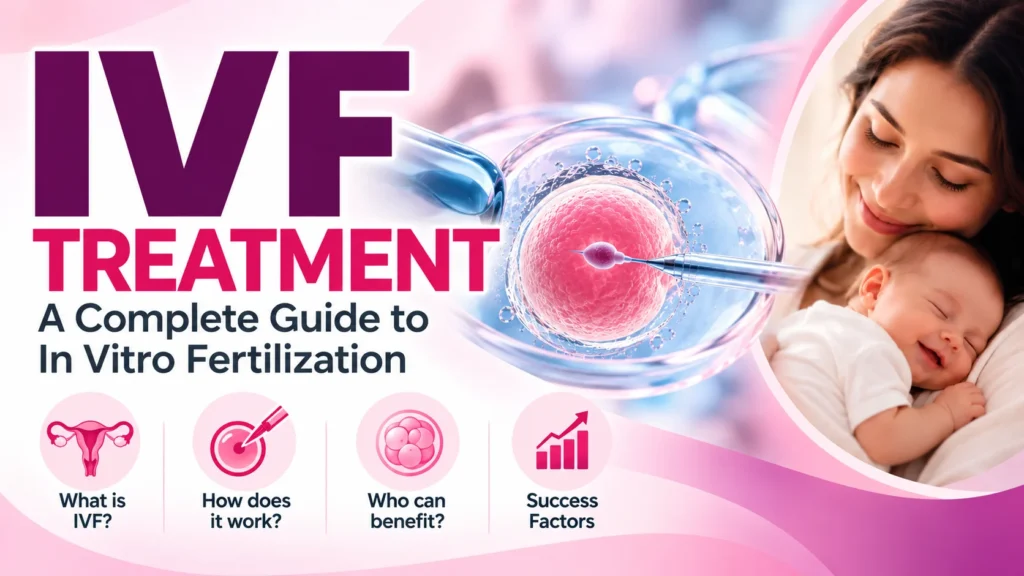
IVF Treatment : Procedure, Benefits, Success Rate, and Cost
Hospital Name: Hope Maternity Home And Imaging Center
Doctor: Dr. Seema Agarwal (M.B.B.S. & D.G.O.)
Introduction: What Is IVF Treatment?
For couples who experience difficulty conceiving naturally, fertility treatments can provide additional options for building a family. One of the most widely used assisted reproductive techniques is In Vitro Fertilisation (IVF).
IVF is a fertility treatment in which eggs are collected from the ovaries and combined with sperm in a laboratory to achieve fertilisation. If embryos develop successfully, a suitable embryo may be transferred into the uterus to achieve pregnancy.
IVF may be recommended for several fertility-related conditions, including blocked fallopian tubes, certain male-factor infertility problems, endometriosis, unexplained infertility, and situations where other treatments have not been successful.
At Hope Maternity Home And Imaging Center, Meerut, patients can consult Dr. Seema Agarwal (M.B.B.S. & D.G.O.) to discuss their fertility concerns, understand available treatment options, and determine whether further fertility assessment or IVF may be appropriate.
What Does IVF Stand For?
IVF stands for In Vitro Fertilisation. The term “in vitro” means that fertilisation takes place outside the body under controlled laboratory conditions.
During natural conception, an egg and sperm usually meet inside a fallopian tube. During IVF, eggs are collected from the ovaries and fertilisation takes place in a laboratory. The resulting embryos are monitored, and an embryo may subsequently be transferred into the uterus.
IVF is not a single procedure but a treatment process involving several stages, including ovarian stimulation, egg retrieval, fertilisation, embryo development, and embryo transfer.
The exact treatment plan varies according to the patient’s age, medical history, ovarian reserve, fertility diagnosis, and previous treatment outcomes.
Who May Need IVF Treatment?
IVF may be recommended for individuals or couples experiencing different fertility challenges.
1. Blocked or Damaged Fallopian Tubes
The fallopian tubes play an important role in natural conception. If both tubes are blocked or significantly damaged, sperm and egg may be unable to meet naturally. IVF can bypass the fallopian tubes because fertilisation occurs in the laboratory.
2. Male-Factor Infertility
Certain sperm-related problems, such as significantly reduced sperm count or movement, may make natural conception difficult. Depending on the findings, IVF or IVF with Intracytoplasmic Sperm Injection (ICSI) may be considered.
3. Endometriosis
Endometriosis can affect reproductive health and may contribute to infertility. Depending on its severity, the patient’s age, and other fertility factors, IVF may be considered as part of the treatment plan.
4. Ovulation Disorders
Some women experience irregular ovulation or conditions that interfere with the regular release of eggs. Other treatments may be considered first, but IVF can be an option in selected cases when conception remains difficult.
5. Unexplained Infertility
Sometimes, standard fertility investigations do not identify a clear cause of infertility. Depending on the duration of infertility, age, and previous treatments, IVF may be recommended.
6. Previous Fertility Treatment Failure
Couples who have not conceived after other fertility treatments, such as ovulation induction or intrauterine insemination (IUI), may be advised to consider IVF.
7. Fertility Preservation
IVF-related procedures may be used alongside egg or embryo freezing when fertility preservation is appropriate, including before certain medical treatments that could affect reproductive function.
Important: IVF is not necessary for every couple experiencing difficulty conceiving. A fertility evaluation helps determine the most appropriate treatment based on individual medical circumstances.
How Does IVF Treatment Work? Step-by-Step Procedure
IVF generally involves several stages. The duration and details may differ from one patient to another.
Step 1: Initial Fertility Consultation
The first step is a consultation to understand the medical history and fertility concerns of both partners.
The doctor may ask about menstrual cycles, previous pregnancies, duration of infertility, previous fertility treatments, medications, and relevant medical conditions.
Depending on the patient’s circumstances, investigations may include:
- Semen analysis
- Ultrasound examination
- Ovarian reserve assessment
- Hormone tests, when indicated
- Evaluation of the uterus and reproductive organs
- Additional fertility investigations based on clinical findings
These investigations help the treating team develop an individualised treatment plan.
Step 2: Ovarian Stimulation
During a typical IVF cycle, fertility medications are used to stimulate the ovaries to develop multiple follicles.
The doctor monitors the response through ultrasound scans and, when necessary, blood tests. Medication doses may be adjusted according to follicular development and the patient’s response.
The goal is to obtain suitable mature eggs while reducing the risk of treatment complications.
Step 3: Trigger Medication
When the follicles have developed sufficiently, a trigger medication may be administered to support final egg maturation.
Egg retrieval is scheduled according to the timing of the trigger and the treatment protocol.
Following the prescribed timing is important for the safe and effective coordination of the procedure.
Step 4: Egg Retrieval
Egg retrieval is generally performed under ultrasound guidance using a specialised needle. Sedation or anaesthesia is provided as appropriate.
The collected eggs are taken to the embryology laboratory, where they are examined and assessed for maturity.
The number of eggs collected varies according to ovarian reserve, age, and the response to stimulation.
Step 5: Sperm Collection and Preparation
A semen sample is generally collected around the time of egg retrieval. Previously frozen or surgically retrieved sperm may be used in selected cases.
The laboratory processes the sample to prepare sperm for fertilisation.
The appropriate fertilisation technique depends on sperm quality, previous treatment outcomes, and the clinical indication.
Step 6: Fertilisation
Fertilisation may be performed using conventional IVF or ICSI.
In conventional IVF, eggs and sperm are placed together in a laboratory dish so fertilisation can occur.
In ICSI, a single selected sperm is injected directly into a mature egg. This method may be recommended for certain cases of male-factor infertility or previous fertilisation failure.
The doctor and embryology team determine the most appropriate method based on the individual circumstances.
Step 7: Embryo Development
Following fertilisation, embryos are monitored in the laboratory over the next several days.
The embryology team evaluates embryo development and determines which embryos may be suitable for transfer or freezing.
Not every fertilised egg develops into an embryo suitable for transfer. The outcome depends on several biological factors, including egg and sperm quality.
Step 8: Embryo Transfer
An embryo may be transferred into the uterus using a thin, flexible catheter.
Embryo transfer is generally a brief procedure and usually does not require anaesthesia.
Depending on the patient’s medical condition, embryo development, and the treatment plan, transfer may take place during the same cycle or in a later frozen embryo transfer cycle.
The number of embryos transferred is determined according to clinical recommendations and applicable guidelines.
Step 9: Pregnancy Test
A pregnancy test is generally scheduled around 9–14 days after embryo transfer, depending on the protocol and type of transfer.
The doctor will advise the appropriate testing date. Patients should continue prescribed medication unless instructed otherwise by the treating team.
If the result is positive, follow-up care and ultrasound timing will be arranged. If the result is negative, the doctor can discuss the outcome and possible next steps.
What Is the Success Rate of IVF Treatment?
IVF success rates vary significantly between patients and treatment cycles. There is no single success rate that applies to everyone.
Factors that influence IVF outcomes include:
- The woman’s age
- Egg quality and ovarian reserve
- Sperm quality
- The underlying cause and duration of infertility
- The number of eggs collected
- Fertilisation and embryo development
- Embryo quality
- Uterine health and other medical conditions
- Previous fertility treatment outcomes
Age is an important factor because both egg quantity and egg quality generally decline over time. However, individual outcomes can vary considerably.
It is also important to understand the difference between a positive pregnancy test, a clinical pregnancy confirmed by ultrasound, and a live birth. These are different measures of treatment outcomes.
The fertility specialist can explain the likely outcomes based on the patient’s age, medical history, test results, and proposed treatment plan.
IVF cannot guarantee pregnancy or a live birth. Patients should receive realistic, individualised information before starting treatment.
What Is the Cost of IVF Treatment in Meerut?
The cost of IVF treatment in Meerut varies according to the treatment plan, investigations, medications, laboratory procedures, and additional services required.
The total cost may include:
- Initial consultation and fertility investigations
- Ovarian stimulation medications
- Ultrasound monitoring and blood tests
- Egg retrieval and related clinical services
- Sperm preparation and fertilisation
- Embryo culture and assessment
- Embryo transfer
- Embryo freezing and storage, if required
- Frozen embryo transfer in a later cycle, if required
- Additional procedures or medications, when indicated
Some patients may require additional investigations or specialised procedures, which can affect the overall expense.
At Hope Maternity Home And Imaging Center, couples can contact the clinic to enquire about consultations, available services, and the applicable charges for their recommended treatment plan.
Before beginning treatment, ask for a clear breakdown of the expected costs, including medications, laboratory procedures, freezing, storage, and any additional charges that may apply.
IVF vs IUI: What Is the Difference?
IVF and IUI are different fertility treatments. The appropriate choice depends on the diagnosis, age, previous treatment history, and other individual factors.
IUI (Intrauterine Insemination):
- Prepared sperm are placed directly into the uterus.
- Fertilisation occurs inside the body.
- It is generally less invasive than IVF.
- It may be suitable for selected cases of unexplained infertility, mild male-factor infertility, and other appropriate conditions.
IVF (In Vitro Fertilisation):
- Eggs are collected from the ovaries.
- Fertilisation takes place in a laboratory.
- Embryos are monitored before a suitable embryo is transferred into the uterus.
- It may be recommended for blocked fallopian tubes, certain cases of male-factor infertility, or when other treatments have not been successful.
IVF is more complex than IUI and generally involves more medication, monitoring, and procedures. However, it may offer a more appropriate treatment pathway for some fertility conditions.
The decision should be made after discussing the expected benefits, limitations, costs, and risks with the treating doctor.
What Are the Risks and Side Effects of IVF?
IVF is widely used in fertility care, but it involves medications and medical procedures that carry potential risks.
1. Medication Side Effects
Fertility medications may cause temporary symptoms such as abdominal discomfort, bloating, headaches, or mood changes. The symptoms and severity vary between patients.
2. Ovarian Hyperstimulation Syndrome
Ovarian hyperstimulation syndrome (OHSS) can occur when the ovaries respond excessively to fertility medication. Symptoms may include abdominal swelling, pain, nausea, and fluid accumulation.
Severe cases are uncommon but can require urgent medical care. Monitoring and individualised treatment protocols help reduce the risk.
3. Risks Associated With Egg Retrieval
Egg retrieval is generally safe, but possible complications include bleeding, infection, injury to nearby structures, and risks associated with sedation or anaesthesia.
4. Multiple Pregnancy
Transferring more than one embryo can increase the chance of a multiple pregnancy. Twin or higher-order pregnancies carry additional risks for both the mother and babies.
The number of embryos transferred should follow the treating team’s recommendations and applicable clinical guidelines.
5. Ectopic Pregnancy
Although uncommon, pregnancy after IVF can sometimes develop outside the uterus. Appropriate follow-up helps assess the location and development of the pregnancy.
6. Emotional and Financial Stress
Fertility treatment can be emotionally demanding, especially when cycles involve uncertainty or do not result in pregnancy. Couples may benefit from emotional support and clear communication with the treatment team.
Patients should contact their doctor promptly if they experience severe abdominal pain, heavy bleeding, fever, breathing difficulty, or other concerning symptoms during treatment.
How Can You Prepare for IVF Treatment?
Preparation can help patients understand the process and follow the treatment plan safely.
- Attend the recommended fertility consultations and investigations.
- Share your medical history, previous pregnancies, medications, and previous treatment records.
- Follow the prescribed medication schedule carefully.
- Attend ultrasound scans and monitoring appointments.
- Maintain a balanced diet and regular, moderate physical activity.
- Avoid smoking, recreational drugs, and alcohol when trying to conceive.
- Discuss existing medicines and supplements with your doctor.
- Ask about the expected treatment duration, cost, possible side effects, and embryo transfer plan.
- Seek emotional support when needed.
Patients should not start, stop, or change fertility medications without medical guidance.
Frequently Asked Questions About IVF Treatment
1. Is IVF treatment painful?
Some stages, such as ovarian stimulation and egg retrieval, may cause discomfort. Egg retrieval is generally performed with appropriate sedation or anaesthesia. Embryo transfer is usually a brief procedure with minimal discomfort.
2. How long does IVF treatment take?
A typical fresh IVF cycle often takes several weeks from the start of ovarian stimulation through pregnancy testing. The exact duration varies. If embryos are frozen for transfer in a later cycle, the overall treatment timeline may be longer.
3. Does IVF guarantee pregnancy?
No. IVF can help many people conceive, but pregnancy and live birth are not guaranteed. Outcomes depend on age, egg and sperm quality, embryo development, and other medical factors.
4. How many IVF cycles may be required?
The number of cycles varies between patients. Some may conceive after one cycle, while others may need additional treatment. The doctor can review previous results and discuss whether further cycles are appropriate.
5. Can IVF be successful after the age of 35?
Pregnancy through IVF may be possible after age 35, but success rates generally decline with increasing age, particularly when using one’s own eggs. An individual assessment can help establish realistic expectations and discuss available options.
6. What is the difference between IVF and ICSI?
In conventional IVF, eggs and sperm are placed together in a laboratory dish. In ICSI, a single sperm is injected directly into a mature egg. Both are fertilisation methods used within assisted reproduction, and the choice depends on the clinical indication.
7. Is bed rest necessary after embryo transfer?
Prolonged bed rest is generally not recommended after an uncomplicated embryo transfer. Most patients can resume light daily activities, following any individual instructions from their doctor.
8. When should a couple seek fertility advice?
As a general guide, couples may seek a fertility evaluation after 12 months of regular unprotected intercourse if the woman is under 35, or after six months if she is 35 or older. Earlier evaluation may be appropriate for women over 40 or when there are known fertility concerns, irregular periods, or other relevant medical conditions.
Why Consult Hope Maternity Home And Imaging Center for Fertility Guidance?
Choosing a fertility treatment begins with understanding the reasons for difficulty conceiving and reviewing the available options.
At Hope Maternity Home And Imaging Center, Meerut, patients can consult Dr. Seema Agarwal (M.B.B.S. & D.G.O.) to discuss fertility concerns, understand the investigations required, and explore appropriate next steps.
A personalised fertility assessment can help couples make informed decisions about treatment, including whether IVF or another approach may be suitable for their circumstances.
The aim is to provide clear information, appropriate medical guidance, and supportive care throughout the fertility evaluation process.
Book a Fertility Consultation in Meerut
If you are considering IVF treatment, contact Hope Maternity Home And Imaging Center to arrange a consultation and discuss the next steps.
Hospital Name: Hope Maternity Home And Imaging Center
Doctor: Dr. Seema Agarwal (M.B.B.S. & D.G.O.)
Address: 6, Bank Colony, Garh Road, Meerut, Uttar Pradesh, India
Contact Numbers: 9837032733, 9422022401
Email: hopematernityhome@gmail.com
Take the first step towards understanding your fertility options by discussing your medical history, investigations, and personalised treatment plan with a qualified medical professional.
Medical Disclaimer: This article is intended for general educational purposes and is not a substitute for professional medical advice, diagnosis, or treatment. IVF suitability and treatment decisions should be assessed by a qualified medical professional based on individual circumstances.